By
Fiona Triaca
December 4, 2025
•
min read
.png)
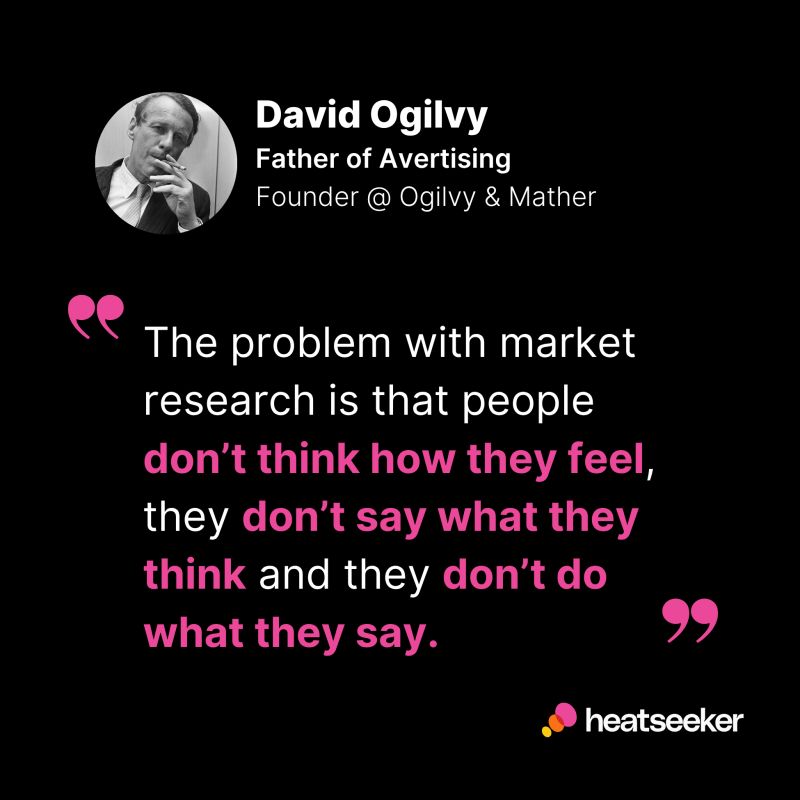
Marketing teams have always chased the same north star: predicting what people will do before they do it. Yet most of what we call “insight” still looks backward — surveys, panels, and reports that reconstruct the past rather than illuminate what’s coming. And in a world where 70% of buying journeys now shift mid-stream and category preferences turn over 3–6x faster than traditional research cycles, backward-looking methods collapse under the speed of modern markets.
This gap between stated preference and revealed behavior is widening fast. 80% of CMOs say traditional research can’t keep pace with how quickly customer needs evolve, according to Gartner.
That tension is exactly why Harvard Business Review’s recent piece on AI-powered market research struck a nerve. It named what many teams already feel: the current system is too slow, too fragile, and too dependent on opinion-based inputs. And it surfaced a promising shift: AI-generated stand-ins for consumers help teams test ideas, narratives, and decisions before they commit real spend.
But the real transformation isn’t generic AI.
It’s behavior-trained synthetics built on verified behavioral signals from your actual market.
For years, personas have been treated as useful but static sketches built from demographics, surveys, and carefully curated assumptions. Increasingly, that’s not enough.
Two parallel approaches are emerging:
Digital twins matter when you need depth on an individual level. Synthetic personas matter when you need to understand and pressure-test an entire audience.
Yet most synthetics today still rely on surface inputs — scraped data, demographic clustering, stated preferences. They approximate general trends, not the behavioral realities of your category or customer base.
The next generation looks nothing like that.
These models are trained on verified behavioral signals captured in the wild and inside your CRM:
With that as the foundation, a synthetic persona becomes a behavioral proxy rather than an imagined profile. Teams can explore how a segment might react to a new story, a product shift, a repositioning, or a creative idea — grounded not in guesswork, but in revealed preference.

One of the most important truths about synthetic data is simple: it must stay fresh. Markets shift quickly. Preferences evolve beneath the surface. Any model trained once and left alone will degrade quickly.
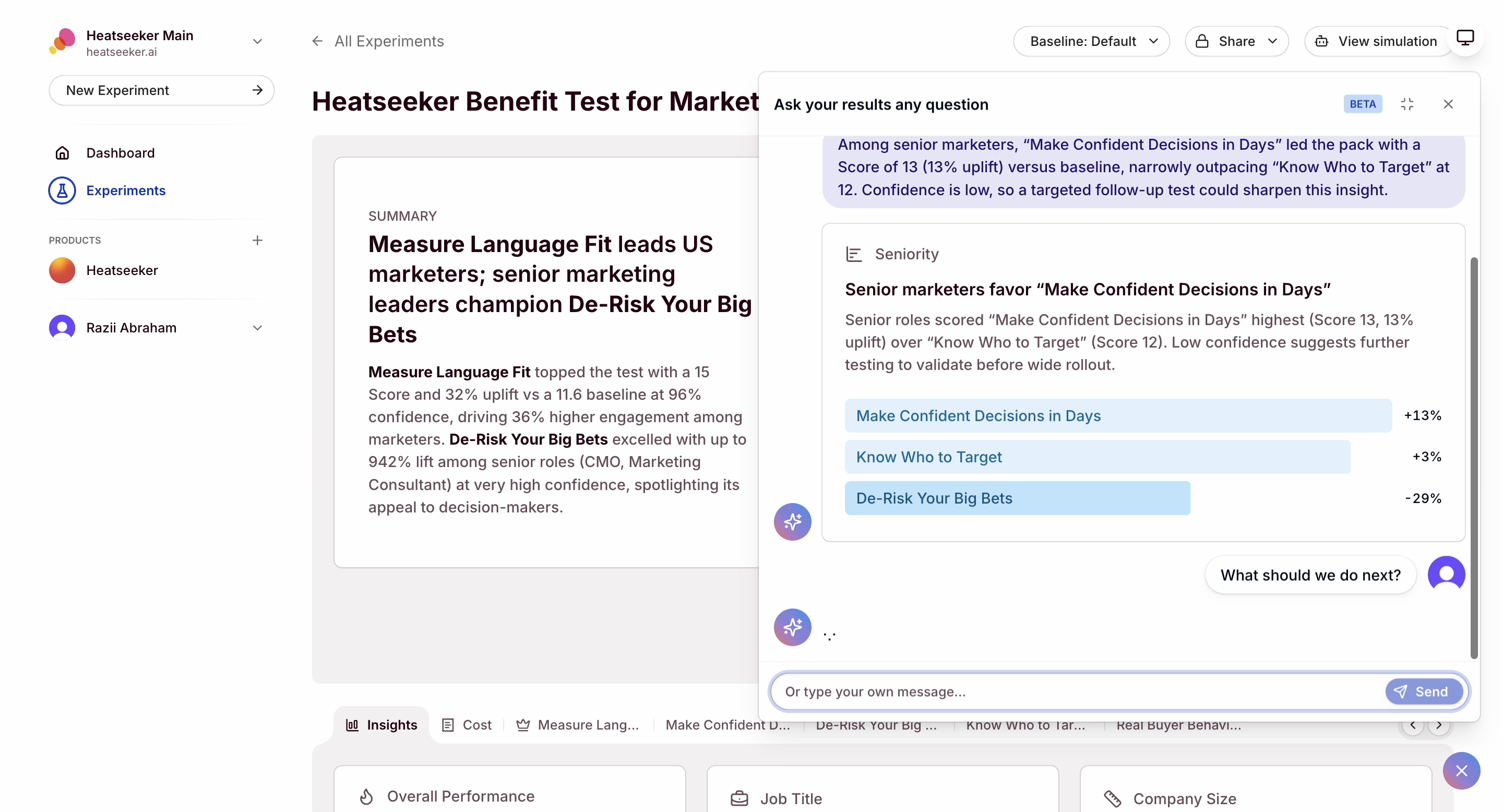
Behavior-trained synthetic personas change that. When continuously refreshed with signals from your ecosystem, they stop behaving like static snapshots and start acting like a living insights system.
This new model blends three layers into a single predictive map of your market:
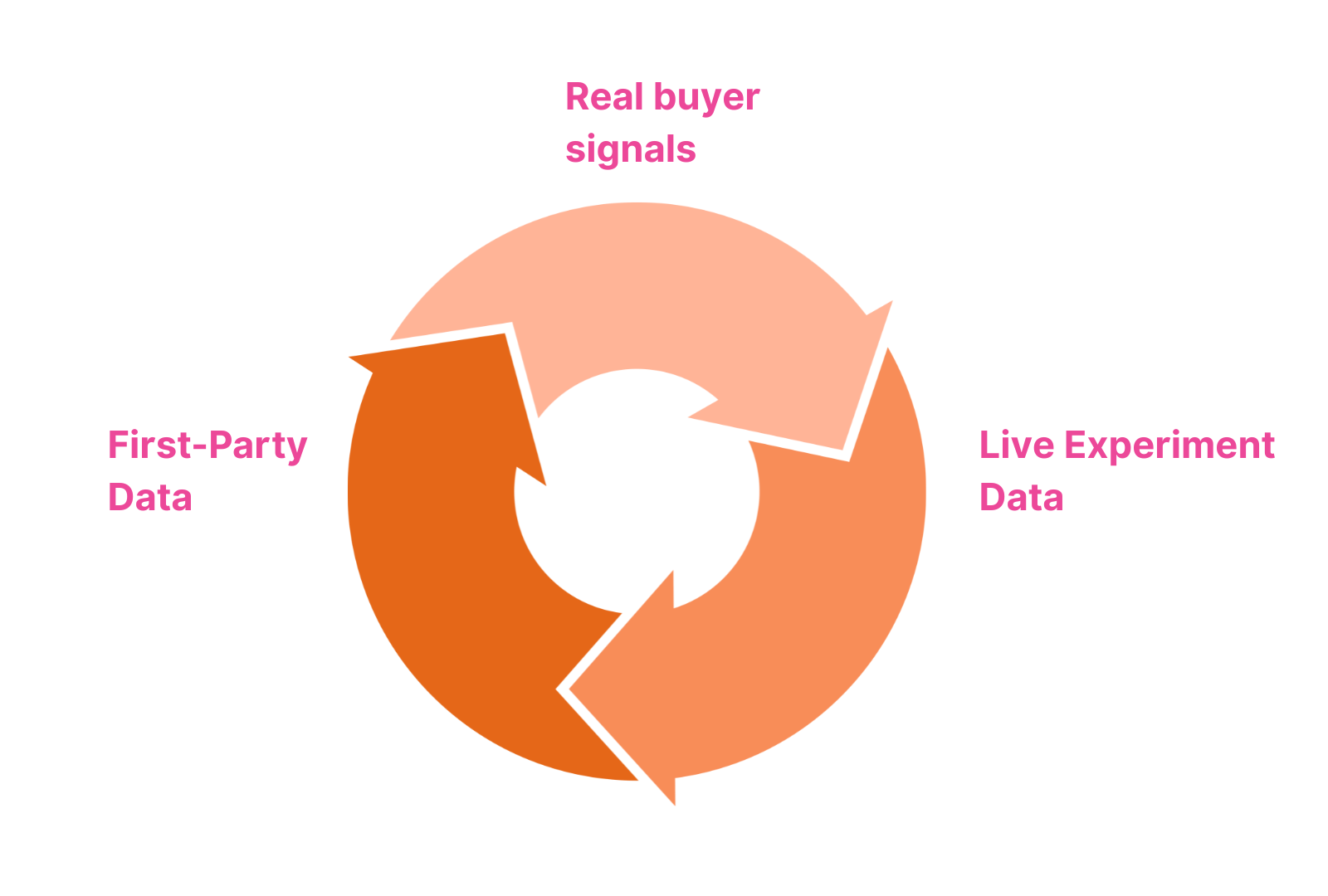
The result: on-demand answers rooted in behavior, not opinion.
Research becomes a continuous function rather than a quarterly chore.
Teams get visibility into what buyers will do, not just what they did.
Inside most companies, insights move vertically. Research teams run the studies. Product teams read the decks. Marketing interprets the charts. Leadership asks for the highlights. Each group works off a slightly different version of reality.
Behavior-trained personas flatten that structure.
When any team can ask a behavioral proxy to evaluate a message, test a framing, or flag objections, insight flows laterally across the organization. Debates shrink because teams are no longer arguing from different data sources — they’re reacting to the same behavioral truth.
The surprise is not that synthetic personas can answer questions.
It’s that they make teams more aligned, less political, and far more confident in the decisions they bring to market.
Synthetic personas and digital twins are still early — and the research community is right to continue exploring accuracy, drift, and the limits of simulation. But the direction is unmistakable.
The value will not come from personas built on surface-level inputs.
It will come from behavior-trained synthetics that:
In that world, teams don’t just understand customers more deeply.
They learn faster than the market itself.
.png)
Marketing teams have always chased the same north star: predicting what people will do before they do it. Yet most of what we call “insight” still looks backward — surveys, panels, and reports that reconstruct the past rather than illuminate what’s coming. And in a world where 70% of buying journeys now shift mid-stream and category preferences turn over 3–6x faster than traditional research cycles, backward-looking methods collapse under the speed of modern markets.
This gap between stated preference and revealed behavior is widening fast. 80% of CMOs say traditional research can’t keep pace with how quickly customer needs evolve, according to Gartner.
That tension is exactly why Harvard Business Review’s recent piece on AI-powered market research struck a nerve. It named what many teams already feel: the current system is too slow, too fragile, and too dependent on opinion-based inputs. And it surfaced a promising shift: AI-generated stand-ins for consumers help teams test ideas, narratives, and decisions before they commit real spend.
But the real transformation isn’t generic AI.
It’s behavior-trained synthetics built on verified behavioral signals from your actual market.
For years, personas have been treated as useful but static sketches built from demographics, surveys, and carefully curated assumptions. Increasingly, that’s not enough.
Two parallel approaches are emerging:
Digital twins matter when you need depth on an individual level. Synthetic personas matter when you need to understand and pressure-test an entire audience.
Yet most synthetics today still rely on surface inputs — scraped data, demographic clustering, stated preferences. They approximate general trends, not the behavioral realities of your category or customer base.
The next generation looks nothing like that.
These models are trained on verified behavioral signals captured in the wild and inside your CRM:
With that as the foundation, a synthetic persona becomes a behavioral proxy rather than an imagined profile. Teams can explore how a segment might react to a new story, a product shift, a repositioning, or a creative idea — grounded not in guesswork, but in revealed preference.
One of the most important truths about synthetic data is simple: it must stay fresh. Markets shift quickly. Preferences evolve beneath the surface. Any model trained once and left alone will degrade quickly.
Behavior-trained synthetic personas change that. When continuously refreshed with signals from your ecosystem, they stop behaving like static snapshots and start acting like a living insights system.
This new model blends three layers into a single predictive map of your market:
The result: on-demand answers rooted in behavior, not opinion.
Research becomes a continuous function rather than a quarterly chore.
Teams get visibility into what buyers will do, not just what they did.
Inside most companies, insights move vertically. Research teams run the studies. Product teams read the decks. Marketing interprets the charts. Leadership asks for the highlights. Each group works off a slightly different version of reality.
Behavior-trained personas flatten that structure.
When any team can ask a behavioral proxy to evaluate a message, test a framing, or flag objections, insight flows laterally across the organization. Debates shrink because teams are no longer arguing from different data sources — they’re reacting to the same behavioral truth.
The surprise is not that synthetic personas can answer questions.
It’s that they make teams more aligned, less political, and far more confident in the decisions they bring to market.
Synthetic personas and digital twins are still early — and the research community is right to continue exploring accuracy, drift, and the limits of simulation. But the direction is unmistakable.
The value will not come from personas built on surface-level inputs.
It will come from behavior-trained synthetics that:
In that world, teams don’t just understand customers more deeply.
They learn faster than the market itself.









.png)

.png)